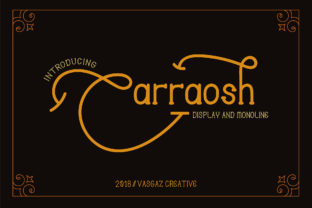
Carraosh: A Modern Monoline Display Font for Impactful Design
Carraosh is a monoline display font that offers a striking, modern, and elegant aesthetic. Its clean lines and uniform stroke width make it ideal for designs that require visual clarity and sophistication. Whether used in signage, book covers, invitations, packaging, or logotypes, Carraosh can help elevate the overall look of a project. This article explores the characteristics of Carraosh, its potential applications, and considerations for designers and developers looking to incorporate it into their work.
What Is Carraosh?
Carraosh is a monoline typeface, meaning that all strokes within the characters are of equal weight. This design choice gives the font a sleek and contemporary appearance. Unlike serif or script fonts, which often add a sense of tradition or fluidity, Carraosh emphasizes simplicity and precision. The font is available in multiple weights, allowing users to adjust the visual impact based on their design needs. Its geometric structure makes it highly legible at larger sizes, making it well-suited for headings and titles.
Why Consider Carraosh?
Designers may find Carraosh appealing for several reasons. First, its modern aesthetic aligns with current design trends that favor minimalism and clean typography. This makes it a strong option for projects aiming to convey innovation or professionalism. Second, the font's versatility allows it to be used across various mediums, from digital interfaces to print materials. Third, its monoline structure ensures consistency in visual hierarchy, helping to maintain a cohesive look throughout a design.
For those working on branding initiatives, Carraosh can serve as a strong foundation for a logo or tagline. Its ability to command attention without overwhelming the viewer makes it suitable for high-impact applications such as billboards, posters, and product labels. Additionally, its lack of decorative elements means it pairs well with other typefaces, offering flexibility in layout design.
Benefits of Using Carraosh
One of the primary benefits of Carraosh is its readability at larger sizes. The font’s uniform stroke width and open counters contribute to a clear and sharp appearance, which is essential for signage and headlines. This makes it an excellent choice for environments where quick recognition is important, such as retail spaces or public transportation systems.
Another advantage is its adaptability. Carraosh can be used in both digital and print formats, making it a practical choice for cross-platform projects. Its availability in different weights also allows for greater control over typographic contrast, enabling designers to create visual interest without complicating the overall design.
Additionally, Carraosh’s modern feel can help differentiate a brand or design from competitors. In industries where aesthetics play a significant role—such as fashion, technology, or luxury goods—using a distinctive font like Carraosh can enhance the perceived value of a product or service.
Tradeoffs and Considerations
While Carraosh has many strengths, it may not be the best choice for every project. One potential limitation is its suitability for body text. Due to its monoline structure, the font may appear too rigid or uninviting when used in long paragraphs. In such cases, a more traditional serif or sans-serif font might be more appropriate for maintaining readability and comfort during extended reading.
Another consideration is the font’s visual impact. While its boldness can be an asset in certain contexts, it may not blend well with more subdued or organic design styles. Designers should evaluate whether Carraosh complements the overall tone and message of their work before incorporating it into a project.
Additionally, the font’s popularity may affect its uniqueness. As more designers adopt similar monoline styles, the risk of visual fatigue or overuse increases. Users should consider how Carraosh will fit into the broader landscape of typography and whether it aligns with their creative goals.
Situations Where Carraosh Excels
Carraosh is particularly effective in situations where a strong, memorable visual identity is needed. For example, in the creation of logos or brand identities, the font’s clean lines and modern appeal can help establish a professional and forward-thinking image. It is also well-suited for editorial design, such as magazine covers or book titles, where a bold and distinctive look is desired.
In digital design, Carraosh can be used for UI elements, such as buttons, headers, or navigation menus. Its legibility at larger sizes ensures that users can easily interact with the interface while maintaining a visually appealing layout. Similarly, in packaging design, the font can draw attention to a product on store shelves, reinforcing brand recognition through consistent typography.
When Alternatives May Be More Suitable
There are scenarios where alternative fonts may be more appropriate than Carraosh. For instance, if a project requires a more traditional or historical feel, a serif font like Garamond or Baskerville could be a better fit. These fonts often convey a sense of timelessness and authority, which may be more aligned with the intended message.
For projects that prioritize warmth or human connection, a script or semi-serif font might be preferable. These types of fonts can add a personal touch, making them ideal for invitations, greeting cards, or marketing materials targeting a more emotional or relatable audience.
Additionally, if a designer is working on a project that requires a wide range of languages or character sets, they may need to consider a font with broader glyph coverage. Carraosh may not support all scripts or special characters, so it is important to verify compatibility before finalizing a design.
Practical Decision-Making Insights
When evaluating whether to use Carraosh, designers should begin by defining their project’s goals and target audience. Understanding the context in which the font will be used helps determine whether its characteristics align with the desired outcome. For example, a tech startup seeking to project innovation may benefit from Carraosh’s modern aesthetic, while a law firm may prefer a more traditional and conservative typeface.
Testing the font in real-world scenarios is also essential. Designers should experiment with different sizes, weights, and pairings to see how Carraosh performs in various applications. This process can reveal any potential issues and help ensure that the font meets the project’s requirements.
Finally, considering the availability of the font is important. Designers should confirm that Carraosh is accessible through their preferred design tools and that licensing terms allow for the intended use. Ensuring that all legal and technical aspects are addressed can prevent complications later in the design process.