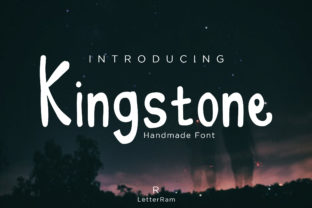
Kingstone: A Modern Display Font for Creative Projects
Kingstone is a modern display font that offers a unique visual identity, blending contemporary design with a natural aesthetic. Designed for versatility and clarity, it is ideal for a wide range of applications, from branding to editorial work. Understanding its characteristics and potential uses can help designers make informed decisions about whether it aligns with their creative goals.
What Is Kingstone?
Kingstone is a typeface that combines clean lines with subtle organic elements, giving it a fresh and approachable look. It is particularly well-suited for display purposes, where readability and visual impact are important. The font's structure allows it to maintain legibility at larger sizes while still offering a distinctive style that stands out in various contexts.
Its design reflects a balance between modern minimalism and traditional typography, making it a versatile choice for both digital and print projects. The font includes a range of weights and styles, providing flexibility for different design needs.
Why Consider Kingstone?
Designers and creatives may find Kingstone appealing for several reasons. Its unique style can add a personal or artistic touch to projects that require a more customized appearance. For instance, logos, invitations, and stationery often benefit from a font that feels both modern and authentic.
Additionally, Kingstone’s natural aesthetic makes it suitable for projects that aim to evoke a sense of warmth or simplicity. This can be especially valuable in industries such as wedding planning, music, or lifestyle branding, where the visual tone plays a significant role in conveying the intended message.
Benefits of Using Kingstone
One of the primary advantages of Kingstone is its readability at larger sizes, which makes it effective for headings, titles, and other prominent text elements. This quality ensures that the font remains legible even when used in bold or stylized forms.
The font’s versatility also contributes to its appeal. Whether used in digital media, print materials, or web design, Kingstone maintains a consistent visual presence. Its ability to adapt to different formats and scales makes it a practical choice for a variety of projects.
Another benefit is its compatibility with other typefaces. Kingstone can pair well with both serif and sans-serif fonts, allowing for greater flexibility in typographic composition. This makes it easier to create cohesive designs without compromising on visual interest.
Considerations and Tradeoffs
While Kingstone offers many strengths, it is important to consider its limitations. For example, its unique style may not be suitable for all types of content. In cases where a more neutral or traditional font is required, Kingstone could appear too stylized or unconventional.
Additionally, the font’s natural aesthetic may not always translate well to smaller text sizes. While it performs well in headlines, it may not be the best choice for body text due to its decorative elements, which can reduce readability at lower point sizes.
Designers should also evaluate the availability of the font. Depending on the platform or software being used, access to Kingstone may vary. Ensuring that the font is available in the necessary formats and licenses is an important step before incorporating it into a project.
Situations Where Kingstone Excels
Kingstone is particularly effective in projects that prioritize visual storytelling or artistic expression. For example, in wedding invitations, the font can add a personal and elegant touch that complements the overall design. Similarly, in photography or music-related projects, its style can enhance the mood and tone of the work.
In branding, Kingstone can help establish a distinct identity that sets a business apart from competitors. Its modern yet natural look can convey a sense of authenticity and creativity, which is valuable for brands aiming to connect with a specific audience.
For editorial projects such as song lyrics or visual designs, Kingstone provides a visually engaging option that enhances the presentation without overwhelming the content. Its ability to blend form and function makes it a strong choice for these types of applications.
When Alternatives May Be More Suitable
There are scenarios where alternative fonts might be more appropriate. For instance, in professional or formal settings, a more traditional typeface may be preferred to convey reliability and consistency. Fonts like Times New Roman or Georgia are often used in such contexts due to their established reputation and readability.
For highly technical or data-driven content, a font with a more neutral appearance may be better suited. In these cases, the focus is on clarity and precision rather than visual flair, making fonts like Arial or Helvetica more practical choices.
Additionally, if a project requires a high level of customization or specific stylistic elements, a more adaptable font may be necessary. Some typefaces offer a wider range of weights, ligatures, or glyphs that can provide greater flexibility for complex design tasks.
Decision-Making Insights
When deciding whether to use Kingstone, it is important to consider the specific goals of the project. Ask questions such as: What is the intended audience? What tone or message should the design convey? Are there any constraints on font usage or availability?
Testing the font in real-world scenarios can also be helpful. Previewing it in different sizes, backgrounds, and layouts can reveal how it performs under various conditions. This process can highlight any potential issues and confirm whether it meets the project’s requirements.
Finally, consulting with other designers or stakeholders can provide additional perspectives. Their feedback can help identify strengths and weaknesses that may not be immediately apparent, leading to a more informed decision.
Conclusion
Kingstone is a modern display font that offers a unique blend of style and functionality. Its natural aesthetic and versatility make it a compelling choice for a variety of creative projects. However, its suitability depends on the specific needs and goals of each design endeavor.
By carefully evaluating its strengths, limitations, and potential applications, designers can determine whether Kingstone aligns with their objectives. Whether used as a primary font or in combination with others, it has the potential to enhance visual communication in meaningful ways.