Penniless Door: A Versatile Display Font for Creative Projects
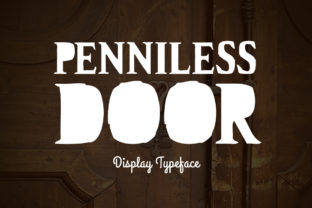
Penniless Door is a newly released display font that has quickly gained attention for its unique aesthetic and broad applicability. Designed with a modern, hand-drawn feel, it offers a distinctive visual identity that can elevate a variety of design projects. Whether you're working on stationery, logos, t-shirts, or website headers, Penniless Door provides a fresh alternative to more traditional typefaces.
As a display font, Penniless Door is not intended for body text but rather for headings, titles, and other prominent typographic elements. Its irregular strokes and organic shapes give it a personal, almost handwritten quality that can add character to any design. This makes it particularly appealing for creative professionals who want to convey a sense of authenticity or individuality in their work.
Why Consider Penniless Door?
There are several reasons why someone might choose Penniless Door over other fonts. One of the primary appeals is its versatility. The font works well across different mediums, from print to digital, making it a practical choice for designers who need a single typeface that can adapt to multiple formats. Its legibility at larger sizes also makes it suitable for use in posters, banners, and image sliders where clarity is essential.
Another factor that may attract users is the font’s distinctiveness. In a market saturated with standard sans-serif and serif fonts, Penniless Door stands out by offering a more unconventional look. This can be especially valuable for brands or individuals looking to create a memorable visual identity that differentiates them from competitors.
Benefits and Tradeoffs
One of the key benefits of Penniless Door is its ability to add visual interest without overwhelming the design. Its organic structure allows it to blend well with both minimalist and more complex layouts. Additionally, because it's a display font, it doesn't require as much spacing as some other styles, which can help maintain a clean and cohesive look.
However, there are tradeoffs to consider. Penniless Door may not be the best choice for all types of projects. Its stylized appearance can sometimes make it less readable at smaller sizes, which limits its use in body text or detailed captions. Designers should also be mindful of how the font interacts with other elements in a composition, as its unique shape may clash with more structured typefaces or graphics.
Another consideration is the availability of variations. While Penniless Door may offer a range of weights or styles, it's important to check whether these options meet the specific needs of a project. If a designer requires additional customization or alternate versions, they may need to explore other fonts or consider modifying the existing one through design software.
Situations Where Penniless Door Excels
Penniless Door is particularly well-suited for projects that benefit from a personal or artistic touch. For example, it can be an excellent choice for branding materials such as business cards, letterheads, or social media profiles where a unique visual identity is desired. Its handcrafted feel can also enhance the appeal of product packaging, especially for niche or artisanal brands.
In web design, Penniless Door can serve as an effective header font that draws attention without being too distracting. It works well in image sliders, banners, and call-to-action buttons where a bold and eye-catching typography is needed. When used sparingly, it can add a sense of creativity and energy to a website’s overall aesthetic.
For print projects, the font’s readability at larger sizes makes it ideal for posters, flyers, and signage. It can also be a strong option for t-shirt designs, where a bold and expressive typeface can make a statement. However, designers should ensure that the font is properly scaled and spaced to maintain clarity in physical formats.
When Alternatives Might Be Better
While Penniless Door has many strengths, there are situations where other fonts may be more appropriate. For instance, if a project requires a clean, professional look, a more conventional sans-serif or serif font might be a better fit. These styles tend to be more versatile and easier to read in a wide range of contexts.
Additionally, if a designer is working on a project that demands high legibility—such as instructional materials, long-form articles, or user interfaces—Penniless Door may not be the best choice. In such cases, a more standardized font would ensure that the message is communicated clearly and effectively.
Designers should also consider the target audience when selecting a font. While Penniless Door may resonate with younger, creative audiences, it may not align with the expectations of more traditional or formal markets. Understanding the preferences and needs of the intended viewers is crucial in making an informed decision.
Practical Decision-Making Insights
When evaluating whether Penniless Door is the right choice for a project, designers should start by defining their goals. Are they looking for a font that adds personality, or do they need something that prioritizes clarity and consistency? Answering these questions can help determine whether the font’s characteristics align with the project’s requirements.
It’s also beneficial to test the font in different contexts. Experimenting with various sizes, colors, and backgrounds can reveal how well it performs in real-world applications. This process can help identify any potential issues before finalizing the design.
Finally, considering the broader design ecosystem is important. Penniless Door should complement other visual elements such as color schemes, images, and layout structures. A harmonious balance between typography and other design components can significantly enhance the overall impact of a project.
Ultimately, Penniless Door offers a compelling option for designers seeking a distinctive and adaptable display font. Its unique style and broad applicability make it a valuable tool in many creative scenarios. However, like any design element, its effectiveness depends on how well it fits the specific needs and goals of the project at hand.